

-
 Bank Ranking
Banks Ratios
Cement Statistics
Cement Ranking
Cement Ratios
Monetary and Economic Statistics
Oil, Gas and Fuel
Macro Economy
Consumer Spending
Inflation
Exports & Imports
Food Prices
Non Food Prices
Construction Materials
Petrochem. Ranking
Petrochem. Ratios
Retail Rankings
Retail Ratios
Grocery Ranking
Grocery Ratios
Top Growth
Dividend History
Bank Ranking
Banks Ratios
Cement Statistics
Cement Ranking
Cement Ratios
Monetary and Economic Statistics
Oil, Gas and Fuel
Macro Economy
Consumer Spending
Inflation
Exports & Imports
Food Prices
Non Food Prices
Construction Materials
Petrochem. Ranking
Petrochem. Ratios
Retail Rankings
Retail Ratios
Grocery Ranking
Grocery Ratios
Top Growth
Dividend History

Full market opening major regulatory milestone; impact hinges on ownership caps: Experts

 AI Summary

Content Summary: 
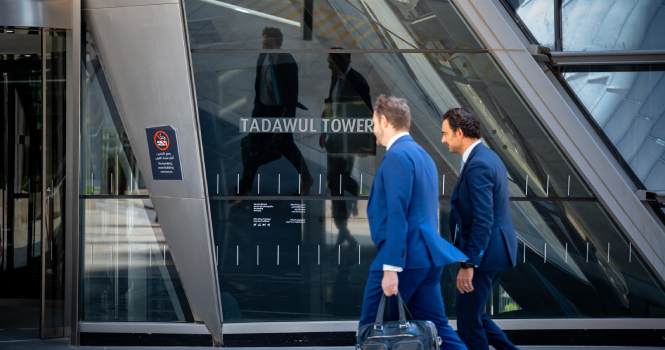
CMA fully opened the Saudi capital market to all categories of foreign investors starting February 2026
Following the Capital Market Authority’s (CMA) decision to fully open the Saudi capital market to all categories of foreign investors starting February 2026, expectations have increased regarding the impact of this move on market performance, investment attractiveness, and future liquidity.
The decision comes as part of ongoing efforts to develop the market and enhance its global standing and represents an extension of reforms aimed at making the market more open and flexible to international capital.
Experts told Argaam that the decision to open the Saudi capital market to all categories of foreign investors represents a significant regulatory step that enhances the market’s attractiveness and broadens the investor base.
They noted that the decision is a first step toward boosting liquidity and improving responsiveness to positive factors but will not be sufficient to deliver immediate transformations, as its effective impact remains linked to broader adjustments to foreign ownership caps.
Market opening is a first step toward deepening liquidity
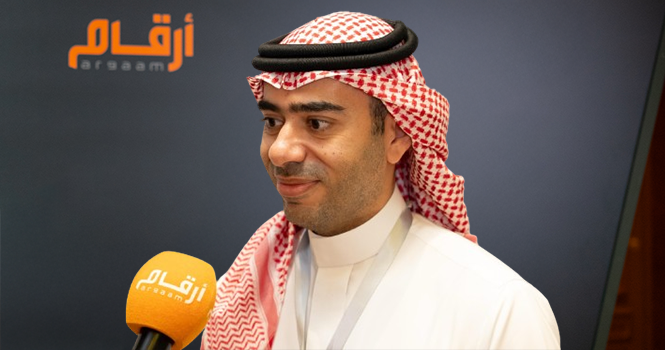
Iyad Ghulam, Head of Equity Research at SNB Capital
Iyad Ghulam, Head of Equity Research at SNB Capital, said that the decision represents a positive first step toward enhancing liquidity and improving investor sentiment, particularly after a challenging year in 2025 that saw weak responsiveness to positive news and an exaggeration of negative developments.
Ghulam explained that this step comes within the framework of ongoing development phases pursued by the CMA to open up the market and enhance its liquidity, attractiveness, and depth. It also represents a preemptive move (as previously clarified by the authority) paving the way for a potential phase of adjusting foreign ownership limits. The move is considered one of the main criteria used by international benchmarks such as MSCI and FTSE, which base their classifications on several core factors, including trading volumes, free float ratios, liquidity of listed companies, and maximum allowable foreign ownership.
Moreover, the decision will help attract foreign investors of varying sizes, including retail investors and smaller investment funds. However, the entry of large passive funds will remain dependent on broader changes to ownership caps, which are still under review and may be implemented fully, partially, or not at all, he added.

Jassim AlJubran, Head of Sell-Side Research at AlJazira Capital
Jassim AlJubran, Head of Sell-Side Research at AlJazira Capital, said that allowing direct access to Saudi equities without prior qualified investor requirements represents an advanced regulatory step that reflects continued efforts to develop the market. It will also strengthen its position as one of the largest and most important emerging markets globally.
However, he indicated that the current regulatory change is unlikely to have a significant immediate impact, as many foreign institutional investors were already participating under the previous framework. As such, the decision is viewed as a supportive regulatory step within the broader development path, rather than a direct catalyst for immediate and major shifts in index performance or capital flows.
AlJubran further revealed that the larger impact remains contingent on subsequent steps, most notably raising ownership limits for qualified foreign investors, which could increase Saudi Arabia’s weighting in global indices and attract notable inflows from passive investors based on index reweighting.

Thamer AlSaeed, Chief Investment Officer at BLME
For his part, Thamer AlSaeed, Chief Investment Officer at BLME, said that the decision can be viewed from two perspectives. First, making the market accessible to everyone from anywhere in the world represents a significant opportunity for the Saudi stock market, as easier access increases the likelihood of liquidity inflows. Today, investors can consider opening accounts and entering the Saudi market more easily, making the move highly positive.
AlSaeed noted that the impact will not be immediate and will emerge over time, as the Saudi market recorded the weakest performance among global markets last year. This could create opportunities as investors begin comparing it with other markets, such as global emerging markets. Facilitating access to the market enhances its appeal to international investors.
He further explained that the second perspective relates to free float ownership ratios for foreign investors, which differs significantly from merely allowing market access.
Can the market opening decision deliver immediate impact?
Ghulam added that the Saudi market is rich with investment opportunities, particularly following the weak performance in 2025, which enhances its attractiveness if sentiment improves and investors begin reassessing growth prospects and appealing valuations not seen in years, across large, mid, and small-cap companies.
He also noted that the decision is expected to improve the market’s responsiveness to supportive factors in stock prices due to a more diversified investor base, especially given the Kingdom’s strong economic environment and the large-scale projects currently being implemented.
AlSaeed explained that the market experienced a surge following statements regarding free float availability and open ownership caps in Q4 2025, to which the market reacted positively. While it is still too early to assess the full impact of the authority’s current measure, he emphasized that foreign investor participation in the market is a very positive development.
AlJubran explained that over the medium term, the current regulatory adjustment is likely to enhance investment attractiveness by facilitating entry procedures and expanding foreign participation, which could positively affect liquidity levels and trading volumes, particularly in heavyweight stocks within major indices.
He noted that diversifying the investor base also supports improved pricing efficiency and reduces excessive concentration among certain investor categories, thereby enhancing market stability over the medium to long term. This step is also expected to more clearly enhance the Saudi market’s appeal to international investors, particularly as improvements continue in market depth, sector diversification, disclosure quality, and the strength of the Kingdom’s economic fundamentals.
Comments {{getCommentCount()}}
Be the first to comment
رد{{comment.DisplayName}} على {{getCommenterName(comment.ParentThreadID)}}
{{comment.DisplayName}}

{{comment.ElapsedTime}}


Comments Analysis: