

-
 Bank Ranking
Banks Ratios
Cement Statistics
Cement Ranking
Cement Ratios
Monetary and Economic Statistics
Oil, Gas and Fuel
Macro Economy
Consumer Spending
Inflation
Exports & Imports
Food Prices
Non Food Prices
Construction Materials
Petrochem. Ranking
Petrochem. Ratios
Retail Rankings
Retail Ratios
Grocery Ranking
Grocery Ratios
Top Growth
Dividend History
Bank Ranking
Banks Ratios
Cement Statistics
Cement Ranking
Cement Ratios
Monetary and Economic Statistics
Oil, Gas and Fuel
Macro Economy
Consumer Spending
Inflation
Exports & Imports
Food Prices
Non Food Prices
Construction Materials
Petrochem. Ranking
Petrochem. Ratios
Retail Rankings
Retail Ratios
Grocery Ranking
Grocery Ratios
Top Growth
Dividend History

Petrochemical disruptions via Hormuz push prices higher, squeeze Asia margins: Analysts

 AI Summary

Content Summary: 
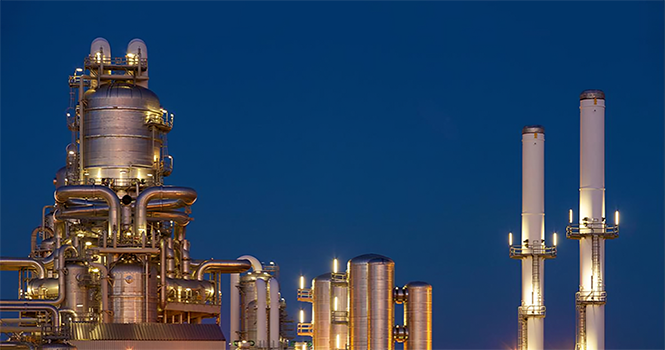
The US–Israel–Iran war has weighed heavily on petrochemical markets, as supply flows through the Strait of Hormuz are disrupted and shipping costs rise, leading to tighter global supply and higher prices.
Analysts told Argaam that the current crisis is driven by supply chain disruptions rather than weak demand, amid partial shutdowns in production capacity and a sharp increase in transport and insurance costs.
James Wilson, an analyst at ICIS, said geopolitical tensions in the region have caused severe disruptions in petrochemical markets, with 75% to 80% of chemical exports from the Middle East affected. "I think in practice it might be higher," he noted. "By that, I mean, the chemical experts, which is struggling to leave the Middle Eastern region. Right? we are 100% seeing the impacts on the markets at the moment."

James Wilson, an analyst at ICIS
"You're already, we can see the impact immediately. So where the impact is most failed," the analyst said.
Global prices are increasing very quickly. "So, we have a number of prices which have increased by it. I don't know, doubled up by double digit percent points or doubled," Wilson noted.
Logistics constraints pressure Gulf petchems despite cost advantage
Joe Douaihy, economist at Coface, said Gulf petrochemical producers are facing short-term negative impacts due to their inability to export output, stressing that the issue is not demand-related but linked to disrupted logistics.
 Joe Douaihy, economist at Coface
He added that while Gulf producers benefit from a global cost advantage—particularly low-cost ethane feedstock—this advantage is neutralized when exports are blocked, leading to lower shipments, weaker revenues, and pressure on operating rates.
Asia at the center of the crisis as 30% of cracking capacity shuts down
Wilson said Asia is the most affected due to its heavy reliance on Middle East supplies. "Obviously, the Middle East has impacted itself. Right now, the biggest impact we're seeing is in Asia. Asia gets more exposed to the Middle Eastern feed stock. than anywhere else in the world."
He added that Asia exports about a third of its crude from the Middle East. In addition, all of the LPG and naphtha that the Middle East sends out, goes to Asia.
"About 30% of capacity is offline directly as a result of what's happening with Iran," the analyst said.
He added that steam cracking is the process through which ethylene and propylene are produced, or one of the processes, the main route for making ethylene appropriately.
Douaihy said that several Asian producers started cutting operating rates or declaring force majeure due to feedstock shortages, amid heavy reliance on Gulf supplies.
Ships stranded near India push prices higher
Wilson said vessel traffic through the Strait of Hormuz has fallen to minimal levels, with only one or two ships passing per day. He added that insurance remains available but at significantly higher costs, while fuel expenses for ships have surged sharply, which is the primary reason behind the increase in freight rates.
He noted that a large number of vessels are currently anchored near India, awaiting a possible reopening of shipping lanes. If the disruption persists, some ships may be redirected to other destinations, further destabilizing supply chains.
Wilson warned that rising transport costs and delayed deliveries are tightening supply and pushing up petrochemical prices globally.
Douaihy added that shipping costs are increasing due to higher insurance and fuel prices, with no clear alternative routes for Gulf petrochemical exports. He stressed that most petrochemical products cannot be easily rerouted compared to crude oil, leading to supply bottlenecks and supporting higher prices.
Hormuz disruption tightens feedstock supply and pushes global prices higher
Alex Sands, head of petrochemical pricing at Argus Media, said the disruption has severely restricted feedstock flows into plants, especially in Asia, pushing up raw material costs.
He noted that about 37% of global naphtha trade and 25% of LPG trade passes through the Strait of Hormuz, mostly destined for Asia, explaining the severity of the impact.
Sands added that some Asian plants have shut down while others have reduced operating rates, with further shutdowns possible as inventories are depleted. Ethylene prices in Asia have nearly doubled since the crisis began, while polyethylene prices have risen by around 57%.
He also said disrupted Middle East exports have led to significant volumes being trapped within the region, tightening global supply and reinforcing price increases.
Supply disruptions deepen global shortage as 20% of olefins capacity goes offline
Sands said around 14 million tons per year of polyethylene exports normally pass through the Strait of Hormuz under normal conditions, with the shutdown preventing about 1.2 million tons per month from leaving the region—equivalent to roughly 15% of global supply.
Wilson said the current crisis differs from past shocks such as COVID-19, as demand remains intact while the problem lies in constrained supply. He noted that about 20% of global olefins supply (ethylene and propylene) is currently unavailable, creating a significant supply-demand imbalance.
He added that the market is experiencing “supply-led demand destruction,” where consumption falls simply because material is unavailable.
Douaihy said Asian producers are under growing pressure due to heavy reliance on Gulf imports of feedstocks and petrochemicals, including ethylene, propylene, naphtha, and methanol.
He noted that supply disruptions have pushed up feedstock and product prices across the value chain, with sharp increases since the start of the crisis: naphtha and methanol up around 50%, polyethylene (33%), and polypropylene (42%).
Despite higher prices, Douaihy warned that profitability is not necessarily improving due to weak downstream demand in sectors such as construction and automotive, limiting cost pass-through.
He added that several Asian producers have declared force majeure or cut operating rates due to feedstock shortages, while trade flows are gradually shifting toward alternative suppliers, particularly the US.
Douaihy stressed that Middle East producers’ ability to benefit from these shifts depends on their capacity to resume exports. If flows return, prices may gradually ease as the market rebalances.
Crisis impact extends beyond SABIC
SABIC declared force majeure on methanol and styrene sales starting March 26 due to logistical disruptions linked to tensions and shipping delays through Hormuz, according to Argus Media.
This coincides with operational constraints in the market, including maintenance at some styrene production units in the US—among them the joint venture facility between SABIC and TotalEnergies in Carville, Louisiana.
Sands said SABIC’s move reflects broader systemic disruption, adding that the shutdown of Sadara Chemical Co.—one of the world’s largest petrochemical complexes—due to supply chain disruptions reflects the depth of the crisis. He warned that further shutdowns could occur if current conditions persist.
Operating rates at styrene plants in North America ranged between 56% and 60%, impacted by scheduled maintenance, with expectations to rise to around 65% as some units resume operations in April, according to Argus Media data.
The crisis also coincided with a broad global maintenance season affecting units in the US, Saudi Arabia, and Europe, further intensifying supply tightness.
Styrene market tightens as prices surge
Styrene monomer prices hit a two-year high, with disruptions from the Middle East sharply reducing export flows through Hormuz, Argus data showed.
US producers are seeking to fill the supply gap in Europe, as the European market relies heavily on Middle East supplies. Saudi Arabia accounts for about 33% of Europe’s styrene imports, 40% of India’s, and 44% of China’s.
Shipping costs from the US Gulf Coast to Europe have also doubled to around $140 per ton, compared to $72 in February, amid limited vessel availability.
Asia margins hit record lows; US emerges as key winner
Wilson said Asian naphtha-based producers are now facing historically low margins as feedstock costs rise faster than product prices, potentially accelerating plant shutdowns.
Douaihy noted that the crisis impact on margins remains uneven across regions and products, explaining that naphtha-based producers—particularly in Asia—are the most exposed due to rising feedstock costs and heightened supply risks at the same time.
He added that European producers will continue to face pressure on margins amid elevated energy costs, especially gas and electricity. While their lower reliance on Gulf supplies reduces supply risk, it does not offset the impact of higher costs on financial performance.
In contrast, both Douaihy and Wilson agreed that ethane-based producers—especially in the US—are emerging as the biggest potential beneficiaries of prolonged tensions, supported by lower feedstock costs and a widening gap between oil and gas prices.
Wilson added that producers in the US and Canada could benefit the most due to their reliance on low-cost ethane, noting that their production costs have not increased at the same pace as global peers.
He also highlighted that the cost gap between the US and the rest of the world has widened, enhancing the competitiveness of US exports in the coming period.
Mid-April seen as turning point; demand risk rising
Wilson warned that mid-April could mark a critical turning point if supply disruptions worsen, potentially slowing or even reversing global demand growth if conditions persist for months.
Douaihy said prolonged tensions are likely to keep petrochemical prices elevated, with continued margin volatility—especially for naphtha-based producers and downstream sectors most exposed to rising costs.
He added that markets may see further rerouting of trade flows, with Asia increasingly turning to imports from outside the Gulf region.
Douaihy warned that any further escalation or deeper supply disruption could push prices even higher, force operating rate cuts, and increase the risk of demand destruction if end-user industries cannot absorb rising costs. Margin pressures could also extend across the entire value chain if the crisis intensifies.
According to Argus Media data, supply shortages are already feeding into downstream industries, with rising prices for products such as polystyrene and ABS, potentially impacting consumer goods like packaging and plastic products.
Sands noted that higher plastic prices will pass through to a wide range of consumer goods. He explained that the impact may be limited in segments like packaging, but more significant in sectors heavily reliant on plastics, such as automotive and construction.
He also warned that supply chain disruptions could slow broader industrial activity—not just raise costs—adding that market recovery will take time, requiring production units to restart, inventories to rebuild, and global trade flows to normalize.
Delayed impact on Europe and US, with short-term opportunities
Wilson said the impact is currently concentrated in Asia and has not yet fully reached Europe and the US, though he expects the effects to emerge later if the crisis persists.
He added that European producers may benefit temporarily from reduced imports and higher prices, but stressed that the long-term impact remains negative for the global market.
Wilson warned that prolonged disruption will intensify pressure on supply chains and prices, with clear risks to global demand and profit margins. He noted that recovery will take time even after flows resume, due to shipping dislocations and the need to rebuild inventories.
Slow recovery and sustained market pressure
Douaihy said the crisis underscores the Gulf region’s central role in global petrochemicals, noting that the competitive advantage of Gulf producers—driven by low-cost ethane—depends on their ability to export normally.
He added that continued disruptions will increase price volatility, accelerate trade rerouting, and strengthen the position of producers outside the Gulf—particularly ethane-based players in the US—while Asia remains the most exposed region.
Meanwhile, Sands said shipping companies are likely to remain cautious about returning to affected routes due to high insurance and freight costs.
He added that a quick recovery in global chemicals and plastics trade is unrealistic, with rebalancing likely to take several months—possibly six months or more.
Sands also warned that ongoing tensions will sustain upward pressure on prices, alongside rising risks to demand due to inflation and supply disruptions.
Comments {{getCommentCount()}}
Be the first to comment
رد{{comment.DisplayName}} على {{getCommenterName(comment.ParentThreadID)}}
{{comment.DisplayName}}

{{comment.ElapsedTime}}


Comments Analysis: