

-
 Bank Ranking
Banks Ratios
Cement Statistics
Cement Ranking
Cement Ratios
Monetary and Economic Statistics
Oil, Gas and Fuel
Macro Economy
Consumer Spending
Inflation
Exports & Imports
Food Prices
Non Food Prices
Construction Materials
Petrochem. Ranking
Petrochem. Ratios
Retail Rankings
Retail Ratios
Grocery Ranking
Grocery Ratios
Top Growth
Dividend History
Bank Ranking
Banks Ratios
Cement Statistics
Cement Ranking
Cement Ratios
Monetary and Economic Statistics
Oil, Gas and Fuel
Macro Economy
Consumer Spending
Inflation
Exports & Imports
Food Prices
Non Food Prices
Construction Materials
Petrochem. Ranking
Petrochem. Ratios
Retail Rankings
Retail Ratios
Grocery Ranking
Grocery Ratios
Top Growth
Dividend History

Oil tanker market: Who owns ships, who controls trade?

 AI Summary

Content Summary: 
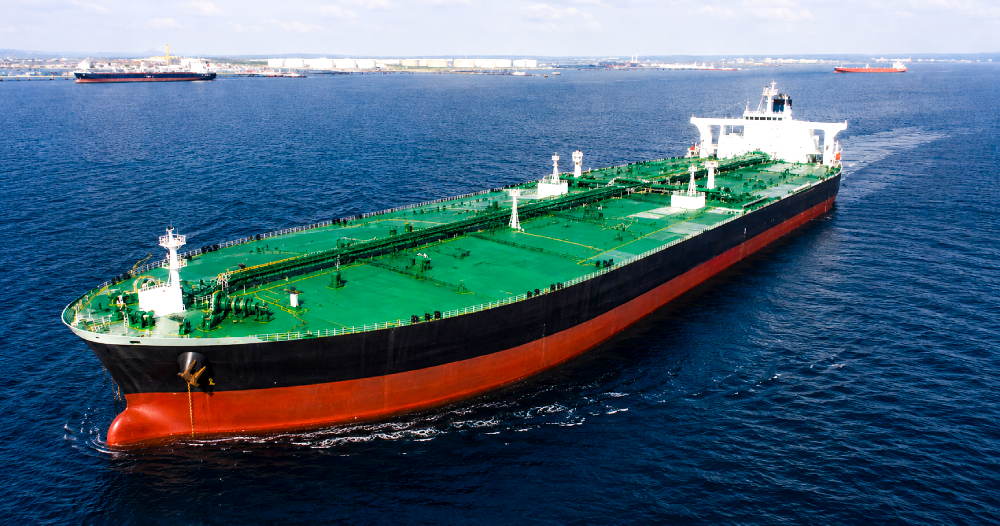
Oil tanker freight rates surged to unprecedented levels in September.
Oil tanker freight rates surged to unprecedented levels in September 2026, amid rising security and insurance risks, disruptions to maritime traffic, and a decline in the number of vessels willing to operate on certain routes.
The time charter equivalent (TCE) earnings on the benchmark TD3C route, which carries 270,000 tons of crude from the Arabian Gulf to China, reached about $1.21 million per day in the Baltic Exchange assessment at the end of the week ended Sept. 18, compared with significantly lower levels before the disruptions escalated.
This figure represents an equivalent return calculated for a standard voyage and does not necessarily reflect the direct cost of chartering a specific tanker.
The same route was assessed at about $1.09 billion per day on Sept. 15 for a voyage from Ras Tanura in Saudi Arabia to Ningbo in China.
Reports also indicated that the VLCC Kuwait Prosperity, operated by Sinokor, was fixed by Total Singapore for a cargo from the Arabian Gulf to the East at WS 1350, equivalent to more than $1 million per day.
Several factors have contributed to these developments, including rising security risks, disruptions to shipping through the Strait of Hormuz, higher insurance costs, and a decline in the number of tankers willing to operate in the region.
Saudi Arabia’s Ministry of Energy denied reports that the Kingdom had purchased 25 oil tankers, noting that higher freight costs were linked to geopolitical developments and risks facing maritime shipping.
The surge in rates highlights the structure of the tanker market, where vessel ownership alone does not determine available supply or price direction. The way vessels are operated and commercially controlled, as well as the contracts associated with them, also play a key role.
A tanker may be owned by one company while being operated or chartered by another company under a time charter or marketed in the spot market. As a result, a company can have commercial control over a large number of tankers without being the legal owner of all those vessels.
Crude, product tanker categories
Oil tankers vary in size, cargo type, and the routes they serve, affecting the ports, canals, and sea lanes they can access.
VLCCs are among the largest tankers widely used to transport crude oil and can typically carry about 1.9 million to 2.2 million barrels of crude.
Suezmax tankers are the next major class, with a capacity of about 1 million barrels. Their name is historically associated with vessels capable of transiting the Suez Canal within applicable navigation restrictions.
Aframax tankers are smaller and are widely used for regional and medium-haul voyages and in areas where VLCCs or Suezmax tankers are not required.
In the petroleum products market, MR, LR1, and LR2 tankers are widely used to transport products such as diesel, gasoline, jet fuel, and naphtha. Some larger tankers can operate in either crude or product markets, depending on the vessel’s design, tank configuration, and cargo type.
Tanker size determines route
A tanker’s size determines not only the amount of oil it can carry but also its ability to use particular maritime routes and canals.
The Panama and Suez canals impose restrictions related to vessel dimensions and draft. In the Panama Canal, larger vessels compatible with the Neopanamax system use the new locks, which are chambers that raise or lower vessels between different water levels during transit.
A Neopanamax lock chamber is about 427 meters long and 55 meters wide. However, this does not mean that any vessel with these dimensions can transit the canal, as vessels are subject to lower operating limits related to length, beam, draft, and safety requirements.
In September 2026, the Panama Canal Authority introduced temporary changes to capacity and reservations due to lower rainfall in the canal watershed.
The canal reduced the number of daily Neopanamax slots to nine effective Sept. 3, while setting 25 daily slots for Panamax locks before reducing them to 23 slots effective Sept. 15.
The canal also divided daily auctions into four groups, with the fourth group including chemical tankers, crude oil tankers, and petroleum product tankers.
These restrictions are commercially significant, as changing a vessel’s route or increasing waiting times keeps it out of the market for longer, reducing the number of tankers effectively available for new voyages.
How large is global fleet?
Data from Barry Rogliano Salles (BRS), a company specializing in shipping consultancy and research, shows the size of the active fleet across several major tanker classes as of June 2026.
According to BRS classification, the number of VLCCs stood at about 923, Suezmax tankers at 726, Aframax tankers at 687, and Panamax tankers at 68.
For product tankers, the number of LR2 vessels stood at 546, LR1 at 395, MR2 at 1,972, and MR1 at 497.
Adding these figures does not necessarily represent the total global oil tanker fleet, as the figures cover specific classifications and vessel classes. Comparisons between fleet sizes also need to take into account tanker type, use, age, and operating condition.
More importantly, the presence of a vessel in the global fleet does not necessarily mean that it is available to carry a new cargo in the spot market.
Commercial control does not mean ownership
One of the key characteristics of the tanker market is that the company commercially controlling a vessel is not necessarily its legal owner.
A vessel may be owned by a shipping company but operate for another company under a time charter, be part of a commercial pool, or be marketed and operated by another party in the spot market.
Therefore, measuring the size of any market player requires distinguishing between the number of vessels it legally owns, the number it operates or charters, and the number it can commercially market and control.
This distinction is particularly evident in South Korean company Sinokor’s expansion in the VLCC market.
In February 2026, Signal Ocean estimated that Sinokor commercially controlled around 78 active VLCCs in the spot market, with the number expected to reach 88 vessels at the time.
According to Signal Ocean’s February estimates, reaching 88 vessels would have meant controlling around 24% of the VLCC fleet trading in the spot market and about 12% of the global fleet. These percentages were based on market estimates at the time and do not necessarily reflect the current position as of September 2026.
The company’s expansion accelerated significantly thereafter through purchases of second-hand tankers.
In the latest data published on Aug. 24, 2026, Lloyd’s List reported that Sinokor had taken delivery of 72 VLCCs purchased since the start of its acquisition program in December 2025. At least five additional vessels previously announced as purchased had yet to be delivered, bringing the potential number of acquisitions to nearly 80 if the deals are completed.
This highlights the difference between the two figures: the number of vessels Sinokor has purchased or taken delivery of does not necessarily equal the number of vessels it commercially controls, as commercial control can also include vessels chartered or marketed on behalf of the company without being legally owned by it.
Major owners, operators
Saudi Arabia-based Bahri is among the world’s major owners of large crude oil tankers. The company’s current data shows that its fleet includes 50 VLCCs out of a total fleet of more than 107 vessels.
By the end of June 2026, the company said its owned fleet reached 107 vessels after acquiring five chemical tankers and selling an older VLCC. Its total managed fleet stood at 109 vessels, including two vessels under long-term charter agreements.
Shipping major Frontline’s owned fleet stood at around 73 vessels as of June 30, 2026, comprising 36 VLCCs, 19 Suezmax tankers and 18 LR2/Aframax tankers, with a total capacity of around 17.1 million deadweight tons.
The company’s fleet underwent vessel purchases, sales and newbuild deliveries during 2026. Therefore, it is important to tie the figure to a specific date rather than treat it as a fixed number throughout the year.
China Merchants Energy Shipping operated 51 VLCCs at the end of 2025, with a total capacity of around 15.8 million deadweight tons, in addition to new vessels under construction.
Meanwhile, DHT Holdings, which specializes primarily in VLCCs, had 23 vessels in operation at the end of June 2026, with a total capacity of around 7.16 million deadweight tons.
Comparing these figures does not mean that the company owning the largest number of vessels is necessarily the most influential in the spot market, as a part of a fleet may be tied to long-term contracts, while other companies can increase their commercial presence by chartering vessels owned by third parties.
Why are oil shipping costs rising?
Freight rates are not determined solely by the total number of tankers in the world. Instead, they depend on the number of vessels actually available to transport a specific cargo, on a specific route and at the required time.
When security risks rise in a key region, the number of vessel owners willing to enter the area may decline, while insurance and risk-related costs increase.
If vessels are forced to use longer routes or face longer waiting times, each tanker spends more days on a voyage and consequently completes fewer voyages over the same period.
The US Energy Information Administration (EIA) noted that heightened risks around the Strait of Hormuz during 2026 reduced the availability of tankers capable of or willing to enter the region, pushing crude tanker rates to elevated levels. Longer shipping distances also reduce vessel availability and increase actual demand for fleet capacity.
This highlights the difference between the size of the global fleet and the commercially available supply.
There may be hundreds of tankers around the world, but if a large portion is tied to contracts, operating in other regions, outside the traditional commercial fleet, or unwilling to enter a high-risk area, the number of vessels available to execute a specific cargo can decline significantly.
As this effective supply tightens, freight rates can rise sharply even when the total number of tankers in the world remains unchanged.
Comments {{getCommentCount()}}
Be the first to comment
رد{{comment.DisplayName}} على {{getCommenterName(comment.ParentThreadID)}}
{{comment.DisplayName}}

{{comment.ElapsedTime}}


Comments Analysis: