

-
 Bank Ranking
Banks Ratios
Cement Statistics
Cement Ranking
Cement Ratios
Monetary and Economic Statistics
Oil, Gas and Fuel
Macro Economy
Consumer Spending
Inflation
Exports & Imports
Food Prices
Non Food Prices
Construction Materials
Petrochem. Ranking
Petrochem. Ratios
Retail Rankings
Retail Ratios
Grocery Ranking
Grocery Ratios
Top Growth
Dividend History
Bank Ranking
Banks Ratios
Cement Statistics
Cement Ranking
Cement Ratios
Monetary and Economic Statistics
Oil, Gas and Fuel
Macro Economy
Consumer Spending
Inflation
Exports & Imports
Food Prices
Non Food Prices
Construction Materials
Petrochem. Ranking
Petrochem. Ratios
Retail Rankings
Retail Ratios
Grocery Ranking
Grocery Ratios
Top Growth
Dividend History

When the Shock Came

 AI Summary

Content Summary: 
✍️Islam Zween
When I took the stage at the Argaam Summit last May to discuss the 10 x 10 report, I was a little anxious. The report had been finished a few weeks earlier, and I kept hearing the same question from some of those who had read it, phrased in different ways: is the report pessimistic? Had we gone too far in putting certain sectors and economic assumptions through stress tests we might not need?
I understood the question. The report came ten years after the launch of Vision 2030, at a time when it would have been easier to focus on how much had been achieved: companies, factories, projects, tourism, investment and entire sectors that had emerged or doubled in size within a few years.
But we chose to ask a different question: does this system have enough flexibility to adapt if the equation it was built on changes, namely high oil prices, generous public spending and geopolitical stability?
The question also came only a few weeks after the war between Iran and the United States, which is perhaps why the stress test seemed more pessimistic than we intended.
We were not predicting another war or trying to sketch the next crisis. We wanted to test how resilient a decade of building would prove when conditions became less favourable.
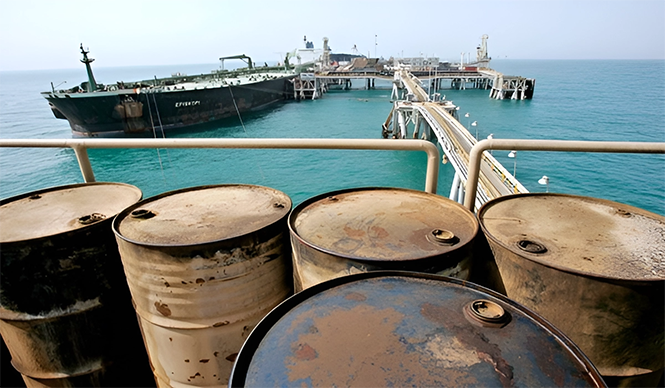
In a report we worked on this week at Argaam Intelligence, we found that Saudi crude oil exports fell by about 38% in the second quarter of 2026 compared with the same period last year.
A drop of that size should have caused a clear fall in the value of exports, unless prices rose enough to make up for the lost barrels. Did that happen? The average realised price per barrel rose by about 62%, so the estimated value of crude exports stayed roughly where it was, at around $37.4 billion.
Put simply, the Kingdom sold far fewer barrels, but it sold each one at a much higher price. What stands out, however, is that the government's oil revenue did not stay flat like the value of exports. It rose by 22% to about SAR 185 billion.
The reason is not the price alone, but the way the government's share of each barrel is calculated. The royalty the state receives from Aramco rises in tiers as the price climbs, reaching 80% of the portion of the price above $100 a barrel. This means higher prices did not just make up for lower volumes; they also raised the government's share of every additional dollar at high price levels.
The budget figures reveal a second paradox. The Kingdom recorded a deficit of SAR 160 billion in the first half of the year. It might seem easy to link this figure to what happened in the oil market, but about SAR 126 billion of the deficit arose in the first quarter, before the disruption to oil exports reached its peak.
In the second quarter, when exports came under the greatest pressure, the deficit was SAR 34.3 billion, compared with about SAR 34.5 billion in the same period last year.
A closer look at the figures shows that government revenue in the first half ran at its usual pace relative to the budget, while spending accelerated markedly.
In other words, the widening deficit up to mid-year was not the result of revenue falling because of the oil disruption, as a first reading of the figures might suggest, but a reflection of higher spending.
I was reminded of this question this week while following the annual royal address, delivered by His Royal Highness Crown Prince and Prime Minister Mohammed bin Salman, in which he stressed that long-term planning does not mean standing still, but being able to adapt to change.
In the same week, the Ministry of Finance's pre-budget statement for 2027 spoke of strengthening the Kingdom's economic resilience in the face of shocks and of balanced fiscal policies across economic cycles. This language reflects a clear shift in economic discourse towards flexibility and adaptability.
What sets this moment apart is that the figures for the first half of the year allow us to see what that flexibility looks like in practice in the public finances: where revenue came from when exports fell, where the deficit arose, and what might change in the second half.
The Ministry of Finance's statement estimates that oil activity will contract by about 21.8% in 2026, against expected growth of about 3.2% in non-oil activities.
Non-oil activities accounted for 57.3% of GDP in the first half, a share that reflects their growth but also the sharp fall in oil activity itself. On the fiscal side, non-oil revenue rose from SAR 166 billion in 2015 to SAR 505 billion in 2025, a major long-term shift, even though it grew by only about 2% in the first half of this year, against spending growth of about 15%.
The 2027 estimates, meanwhile, do not assume a quick return to balance. They project spending of about SAR 1.4 trillion against revenue of SAR 1.2 trillion, a deficit of about 3.6% of GDP, with continued borrowing and other instruments used to finance projects and infrastructure.
This brings us back to the question the 10 x 10 report asked: what do we actually mean by an economy's ability to withstand shocks? In my view, the test of resilience is not preventing a shock from happening.
What matters more is what happens afterwards: how much of it spreads to the rest of the economy? Does the state have to change its spending course? And does the non-oil economy keep growing while oil activity contracts?
So far, some of the answers look better than expected in May, but one important point deserves attention: it was higher oil prices that made up almost entirely for the fall in exports, and we cannot assume they will last. Indeed, the royalty mechanism that worked in the government's favour in the first half, as prices rose above $100 a barrel, could work the other way if prices fall.
Our calculations suggest that a fall in price from about $108 to $90, or roughly 17%, could cut the estimated royalty per barrel by about 36%.
Perhaps, then, the most important question at this year's Argaam Summit was not whether the report was pessimistic or optimistic, but whether it was asking the right questions.
A stress test does not assume that a crisis will happen, or that the outcome will be bad. Its purpose is to tell us what happens if conditions change, where the strengths lie and where the weaknesses remain.
When we published the Argaam Summit report in May, we had no answer. Today, we have at least enough to begin testing it.
What I want to know now is not only how the Saudi economy weathered the 2026 shock, but something more important: how much of what we saw this year genuinely reflects what has changed in the Saudi economy over the past ten years, and how much is simply because oil prices worked in our favour this time?
Click here to read the full study
You Read It Here First in Argaam Weekend

When Fewer Barrels Mean More Revenue
In Q2 2026, Saudi Arabia exported about 40% less crude than in the quarter before, but it sold each barrel for much more. So did the higher price make up for the barrels it couldn’t ship?
How Western media oversimplifies Saudi decision to increase oil production
Our analysis mainly highlights the limitations in recent Western media reports that prematurely conclude Saudi Arabia’s decision to boost oil production is solely aimed at exposing “cheating behavior” within OPEC.
Why Bloomberg’s Break-even Analysis about Saudi oil prices Tell Only Part of the Story
While the recent insights given by a Bloomberg economist highlight important challenges facing Saudi Arabia’s economy amid oil price fluctuations, his recurring emphasis, either in Linkedin posts or comments cited by the global media outlet, on a high fiscal break-even price as the primary indicator of Saudi Arabia’s financial health may present an incomplete picture.

The Surprising AI Data Model Bet by Aramco and ADNOC
Aramco, one the world oil heavyweights famous for fueling the world’s economies with fossil fuels, is now charting a distinctly different course; not beneath the earth, but deep within the realms of data and language.
Comments {{getCommentCount()}}
Be the first to comment
رد{{comment.DisplayName}} على {{getCommenterName(comment.ParentThreadID)}}
{{comment.DisplayName}}

{{comment.ElapsedTime}}


Comments Analysis: