
-
 Bank Ranking
Banks Ratios
Cement Statistics
Cement Ranking
Cement Ratios
Monetary and Economic Statistics
Oil, Gas and Fuel
Macro Economy
Consumer Spending
Inflation
Exports & Imports
Food Prices
Non Food Prices
Construction Materials
Petrochem. Ranking
Petrochem. Ratios
Retail Rankings
Retail Ratios
Grocery Ranking
Grocery Ratios
Top Growth
Dividend History

DIP Holding says ground lease occupancy hits 99.9%, plans AED 350M dividend
19/10/2026
Argaam Special
 AI Summary

Content Summary:
 AI Summary
Content Summary: 
Loading data...
Please note that this news summary has been generated using artificial intelligence. It is recommended to review the original
sources for complete details and to verify the accuracy of the information.
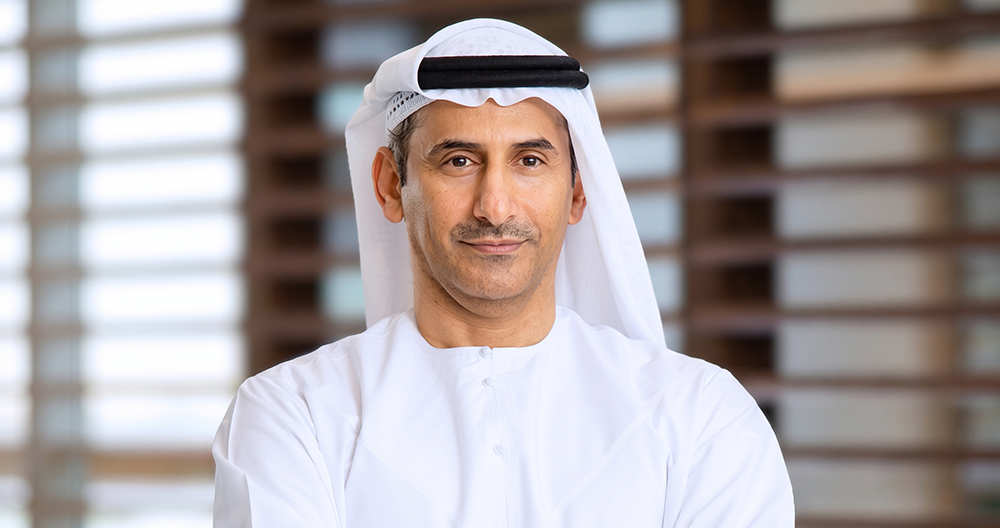
Omar Al Mesmar, CEO of DIP Holding
Omar Al Mesmar, CEO of DIP Holding, said ground lease occupancy at Dubai Investments Park (DIP) stood at 99.9% in the first half of 2026, while subleasing income rose 31% year-on-year (YoY).
In an interview with Argaam, Al Mesmar said the company’s future growth would be driven by generating additional income from leased ground through rent repricing, increased subleasing activity and repositioning plots for higher-value uses.
The company plans to reprice rents on about 10.7 million square meters of land through 2030, representing about 86% of its operating lease ground portfolio, he said. Rents on repriced leases rose by 28% on average.
Al Mesmar expects the first post-IPO cash dividend of AED 350 million to be paid in April 2027. Qualified shareholders will receive dividends covering the full second half of 2026, including the period before the company’s expected listing on Nov. 11.
The interview also addressed the company’s performance, revenue growth drivers, dividend policy, business model, relationship with Dubai Investments and future expansion plans.
Interview details:
1. Why are you going ahead with the IPO during a time of geopolitical uncertainty?
DIP has been built and operated over more than 25 years and has navigated different market cycles over that period. What gives us confidence today is the way the business has continued to perform in the current environment.
In H1 2026, ground lease occupancy remained at 99.9%, we recorded zero tenant defaults or write-offs, ground rental income continued to grow and subleasing income increased by 31% year-on-year – proof that our differentiated offering continues to attract businesses to build a presence within this well-established and mature city within a city.
Against that backdrop, we believe DIP Holding is ready for the public markets and we are proceeding with the IPO while continuing to monitor market conditions closely.
2. How has the Company performed since the start of the year, and how do you expect it to perform for the rest of 2026 and in 2027?
The business delivered a strong first half of 2026. To give a more meaningful comparison with the prior year, we look at performance on a like-for-like basis.
In simple terms, this means comparing the same continuing operating portfolio in both periods, by adjusting H1 2025 to exclude assets that were subsequently sold during the year and were no longer part of the operating portfolio in H1 2026.
On this basis, revenue increased by 7% to AED 492 million, from AED 460 million in H1 2025, while Adjusted EBITDA increased by approximately 9% to AED 355 million, from AED 326 million.
Adjusted EBITDA margin increased to 72% from 71%, and cash conversion remained strong at 97% owed to DIP’s capex-light business model.
We use Adjusted EBITDA to give a clearer view of the performance of the core operating business. The adjustment strips out items such as fair value gains on investment properties and gains on asset sales, which can affect reported profit but are not generated by the recurring day-to-day operations of the business.
This helps provide a cleaner view of underlying operating profitability.
Looking ahead, the business benefits from visible growth drivers including contractual rental repricing, continued subleasing growth and the repositioning of plots toward higher-value uses.
Our focus is on disciplined execution against the business plan, and we would not go beyond the guidance that has been formally disclosed.
3. What drove the rise in revenue in H1 2026, and do you think this is sustainable?
Revenue growth in H1 2026 was primarily driven by higher rental rates and strong growth in subleasing income.
Ground rent growth was driven primarily by repricing rather than occupancy, which was already effectively full at 99.9%. Leases repriced during H1 2026 achieved rents approximately 28% above prior levels.
Separately, subleasing income increased by 31% year-on-year to approximately AED 92 million, driven by a combination of higher subleasing rates and tenant-developed structures that were completed and subleased for the first time.
Another contributor is tenant-led repositioning. This is not DIP redeveloping the land itself; it is where tenants choose to move plots to higher-value uses - for example, from industrial to logistics.
When that happens, DIP can benefit through higher ground rents reflecting the higher-value use and potentially greater subleasing income where tenants sublet space. In H1 2026, approximately 184,000 sqm was repositioned to higher value uses generating rental uplifts.
Importantly, approximately 10.7 million sqm remains due for contractual repricing during H2 2026 to 2030, while continued subleasing activity and tenant-led repositioning provide additional opportunities to grow income from the existing operating portfolio.
4. Do you plan on distributing dividends? And if so how much and when will the first post IPO dividend be distributed to the shareholders?
We intend to pay dividends on a semi-annual basis, supported by the strong cash generation and visibility of the business. The Group expects to distribute annualised dividends of AED 700 million for FY2026, AED 725 million for FY2027 and AED 750 million for FY2028.
The first post-IPO distribution is expected to be AED 350 million in April 2027 and, importantly, it relates to the full second half of 2026.
Although DIP Holding is expected to list on 11 November 2026, all eligible shareholders will benefit from a dividend for the full H2 2026 period, rather than only the portion of that period following Admission.
We believe this is a meaningful feature reflective of the inclusive nature of the dividend framework
5. What are the proceeds of the IPO going to be used for?
This is a secondary offering. All the shares on offer are existing shares being sold by Dubai Investments - DIP’s founder and ultimate owner.
DIP Holding will not receive any proceeds from the IPO. The IPO therefore is not being undertaken to fund a specific development or capital expenditure programme at DIP Holding.
For Dubai Investments, the transaction provides an opportunity to realise part of the value created in DIP Holding while retaining the majority stake.
Any decision on the use of proceeds by Dubai Investments is a matter for our shareholder.
6. Who is DIP Holding? What is its link to Dubai Investments and Dubai Investments Park?
DIP Holding PLC is the DIFC-incorporated holding company and the issuer in the IPO – in other words the company that will be listed and trade on the DFM once the IPO has been successfully completed.
Before the IPO, it is wholly owned by Dubai Investments PJSC. DIP Holding owns 100% of Dubai Investments Park Development Company LLC, or DIPDC, which is the operating company responsible for Dubai Investments Park and which has the 99-year head-lease with the Government of Dubai.
DIP itself is the physical 23 million sqm integrated mixed-use Park. In simple terms: Dubai Investments owns DIP Holding; DIP Holding owns DIPDC; and DIPDC operates Dubai Investments Park.
Dubai Investments would remain the majority shareholder following the offering.
7. If the Park is at almost 100% occupancy, where is the growth coming from?
That’s a great and important question. We are focused on generating more income from the land that is already leased, and there are three main ways we can do that.
First is contractual rent repricing. Our long-term leases include periodic rent reviews, allowing ground rents to be reset in line with prevailing market rates. As at 30 June 2026, approximately 0.8 million sqm has been repriced, resulting in an average increase of 28% for the leases repriced.
A further approximately 10.7 million sqm - around 86% of the operating lease ground rent portfolio — is due for contractual repricing between H2 2026 and 2030. For DIP, that means the potential to earn higher ground rent from plots that are already occupied, without needing to add new land.
Second is subleasing income. When our tenants sublet space within their plots, DIP earns a fee linked to that subleasing activity.
As more space is sublet and subleasing rents increase, DIP can generate additional income from the same plot, on top of the ground rent we already receive.
This is a meaningful contributor to our business, and subleasing income increased by approximately 31% in H1 2026.
Third is tenant-led repositioning to higher-value uses. This is where a tenant chooses to use a plot for a higher-value activity - for example, moving from industrial to logistics.
For DIP, this can translate into higher ground rents reflecting the higher-value use, as well as potentially greater subleasing income. Importantly, the tenant funds the development, rather than DIP.
In H1 2026, approximately 184,000 sqm was repositioned to higher-value uses, , including nine industrial-to-logistics plots where average ground rent increased by more than 50%.
8. What differentiates you from other real estate developers?
DIP Holding cannot be compared to a real estate developer as doesn’t build-and-sell property.
Through DIPDC, the Group operates an infrastructure-like ground rent and services platform. Tenants typically enter into long-term ground leases, fund and develop their own buildings, such as factories or warehouses, while DIPDC earns recurring ground rent, subleasing fees and service income.
This means we have limited direct development risk, because tenants - rather than DIP - fund the buildings on their plots. It also makes the business highly capital-efficient, with limited ongoing development requirements and no reliance on property sales to generate revenue.
That is really what we mean when we describe the model as “infrastructure-like”. It is long-term contracted revenues, limited capital requirements and strong cash generation. You can see that in our financial performance, with cash conversion of 97% in H1 2026 and an Adjusted EBITDA margin of 72%.
The combination of recurring revenues, strong cash visibility and limited capital requirements also support our ability to return capital to shareholders in line with our stated dividend policy.
Since we are not dependent on building and selling properties, our business has less direct exposure to traditional property development cycles.
9. Are there plans to expand the existing Park or build a new one in the UAE?
The existing 23 million sqm Park is near full capacity, and the near- to medium-term growth strategy is focused primarily on maximising value from the existing platform through repricing, subleasing and higher-value uses.
No specific new park or location has been announced. Over the longer term, Dubai Investments may explore opportunities to replicate DIP’s ground rent model in other strategic, high-growth locations, subject to rigorous commercial and financial assessment.
10. Who are your tenants, and what makes them choose DIP over other industrial zones?
DIP has approximately 1,000 tenants across a broad range of sectors, including manufacturing, pharmaceuticals, logistics, retail and hospitality.
The tenant base is highly diversified, with the top 10 operating-lease tenants accounting for approximately 8% of ground rent income in H1 2026.
DIP's appeal is the combination of scale, location, infrastructure and maturity. We are not an industrial zone – we are dynamic self-sustained ‘city within a city’. DIP is strategically positioned in Dubai's southern corridor, close to Jebel Ali Port and Al Maktoum International Airport, with strong road and multimodal connectivity and an integrated live-work-operate environment.
Tenants have invested more than AED 42 billion in their own superstructures within the Park, which is a strong indication of the long-term commitment embedded in our ecosystem.
11. What is the size of the IPO and the expected valuation?
At current, the intention is to offer 20% of DIP Holding’s issued share capital through the IPO. Having said that, Dubai Investments – our sole shareholder - retains the right to amend the size of the Offering, subject to applicable regulatory requirements and approvals.
In terms of valuation and offer size, the IPO Price Range will be announced when the subscription period for all tranches opens on 27 October, and the Final Offer Price will be determined through the institutional book-building process with the final price being announced on 4 November.
Until that process is completed, it would not be appropriate to speculate on valuation.
Comments {{getCommentCount()}}
Be the first to comment
{{Comments.indexOf(comment)+1}}
رد{{comment.DisplayName}} على {{getCommenterName(comment.ParentThreadID)}}
{{comment.DisplayName}}

{{comment.ElapsedTime}}

Sorry: the validity period has ended to comment on this news
Opinions expressed in the comments section do not reflect the views of Argaam. Abusive comments of any kind will be removed. Political or religious commentary will not be tolerated.

Market Indices
Dubai
5,851.39
(15.92)
(0.27 %)
Quotes
Dubai Investments
3.71
0.00
0.00%
Call Request
Comments Analysis: