

-
 Bank Ranking
Banks Ratios
Cement Statistics
Cement Ranking
Cement Ratios
Monetary and Economic Statistics
Oil, Gas and Fuel
Macro Economy
Consumer Spending
Inflation
Exports & Imports
Food Prices
Non Food Prices
Construction Materials
Petrochem. Ranking
Petrochem. Ratios
Retail Rankings
Retail Ratios
Grocery Ranking
Grocery Ratios
Top Growth
Dividend History

Saudi savings deposits surpass demand deposits for first time since 2008

 AI Summary

Content Summary: 
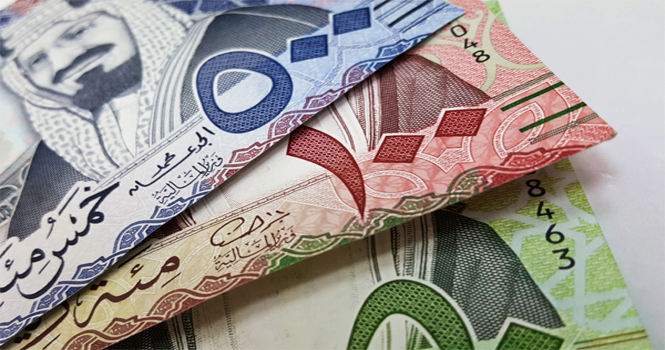
Saudi Arabian banknotes
Time and savings deposits at banks operating in Saudi Arabia surpassed demand deposits for the first time in nearly 18 years, since 2008.
Time and savings deposits reached SAR 1.42 trillion at the end of September 2026, compared with SAR 1.4 trillion in demand deposits, a difference of SAR 12.4 billion, according to the latest data issued by the Saudi Central Bank (SAMA).
The shift came amid significant growth in interest-bearing deposits in recent years, following the start of the interest rate hike cycle in 2022 and a growing trend among depositors toward savings accounts and products offering returns.
Total deposits at banks operating in the Kingdom reached SAR 3.08 trillion as of September 2026. Time and savings deposits accounted for 46.1% of the total, compared with 45.7% for demand deposits, while other deposits made up the remaining 8.2%.
|
Saudi Banking Deposits Breakdown (September 2026) |
||
|
Deposit Type |
Value (SAR bln) |
Share |
|
Time and savings deposits |
1,417.25 |
46.1% |
|
Demand deposits |
1,404.87 |
45.7% |
|
Other deposits |
253.62 |
8.2% |
|
Total |
3,075.74 |
100% |
Time and savings deposits rose 186% from the end of 2021, when they stood at SAR 495.3 billion. Demand deposits, meanwhile, grew just 3.3% over the same period.
The gap between the two types of deposits narrowed rapidly in 2026. Demand deposits led by SAR 260.8 billion at the end of March, but the gap fell to SAR 24.9 billion in August before time and savings deposits took the lead in September.
When Did the Previous Shift Occur?
Historical SAMA data show that time and savings deposits reached SAR 367.6 billion at the end of December 2008, surpassing demand deposits at SAR 342.5 billion.
The trend reversed in January 2009, when demand deposits rose to SAR 353.1 billion, while time and savings deposits fell to SAR 351.7 billion.
The shift reflects different interest rate conditions in the two periods. Lower rates following the global financial crisis reduced the appeal of time deposits, while higher rates in recent years encouraged depositors to move part of their funds into interest-bearing accounts.
|
Historical Comparison of Bank Deposits (SAR bln) |
||
|
Period |
Demand Deposits |
Time and Savings Deposits |
|
December 2008 |
342.49 |
367.62 |
|
January 2009 |
353.10 |
351.70 |
|
December 2015 |
980.15 |
439.38 |
|
December 2020 |
1,282.59 |
473.97 |
|
December 2021 |
1,360.11 |
495.33 |
|
December 2024 |
1,440.64 |
949.71 |
|
December 2025 |
1,432.32 |
1,173.84 |
|
September 2026 |
1,404.87 |
1,417.25 |
Time and savings deposits remain below demand deposits at listed banks
Financial statements for Q3 2026 showed that time and savings deposits at Saudi Arabia's 10 listed banks on the Main Market totaled approximately SAR 1.47 trillion, compared with SAR 1.50 trillion in demand deposits. The latter held a lead of about SAR 26.1 billion.
Time and savings deposits exceeded demand deposits at eight banks. Demand deposits remained higher at Saudi National Bank (SNB) and Al Rajhi Bank.
|
Customer Deposits at Saudi Listed Banks (September 2026) |
|||
|
Bank |
Demand Deposits (SAR bln) |
Time and Savings Deposits (SAR bln) |
Higher Deposit Type |
|
SNB |
442.49 |
201.97 |
Demand |
|
Al Rajhi Bank |
414.83 |
275.50 |
Demand |
|
Riyad Bank |
128.52 |
188.06 |
Time and savings |
|
SAB |
139.89 |
183.98 |
Time and savings |
|
Alinma Bank |
99.72 |
133.00 |
Time and savings |
|
ANB |
101.78 |
111.24 |
Time and savings |
|
BSF |
78.37 |
119.41 |
Time and savings |
|
Bank Albilad |
43.18 |
64.05 |
Time and savings |
|
Bank Aljazira |
29.91 |
98.01 |
Time and savings |
|
SAIB |
20.86 |
98.26 |
Time and savings |
|
Total |
1,499.55 |
1,473.47 |
Demand |
Time and savings deposits include items separately classified in Argaam's database, excluding savings deposits not separately disclosed under other items.
SNB and Al Rajhi accounted for about 57.2% of total demand deposits at the 10 banks, with SAR 442.5 billion and SAR 414.8 billion, respectively.
Demand deposits accounted for 66.1% of total customer deposits at SNB and 59.2% at Al Rajhi, compared with 17.3% at the Saudi Investment Bank (SAIB) and 23% at Bank AlJazira.
The figures highlight differences in banks' funding structures and their reliance on current accounts compared with interest-bearing deposits.
Why do listed banks' deposits differ from total banking deposits?
Total customer deposits at Saudi Arabia's 10 listed banks reached approximately SAR 3.094 trillion at the end of September 2026, compared with SAR 3.076 trillion in total banking deposits reported by SAMA. The difference stood at SAR 17.9 billion in favor of listed banks.
Demand deposits accounted for 66.1% of total customer deposits at SNB and 59.2% at Al Rajhi, compared with 17.3% at SAIB and 23% at Bank AlJazira.
By contrast, listed banks consolidated financial statements include their groups' operations inside and outside the Kingdom, including branches and subsidiaries covered by accounting consolidation.
SNB's financial statements, for example, include customer deposits from its international operations, making total deposits in its consolidated accounts different from domestic banking deposits reported by SAMA.
The higher combined deposits of listed banks therefore do not necessarily indicate a discrepancy between the two sources. Their coverage and consolidation scopes differ.
Fully reconciling the gap, however, requires matching Saudi banks' overseas operations with deposits held at foreign banks operating in the Kingdom.
What does the shift mean for Saudi banks?
Demand deposits are a key source of low-cost funding for banks, mainly comprising current accounts that generally do not pay returns.
Time and savings deposits, meanwhile, typically carry returns paid to customers, making them more expensive than current accounts.
A higher share of these deposits could increase funding costs and pressure net interest margins. Banks may offset this by improving returns on loans and investments or repricing their assets.
The impact varies across banks, depending on the size of their current account base, customer mix, ability to attract and price deposits, and exposure to interest rate changes.
Comments {{getCommentCount()}}
Be the first to comment
رد{{comment.DisplayName}} على {{getCommenterName(comment.ParentThreadID)}}
{{comment.DisplayName}}

{{comment.ElapsedTime}}


Comments Analysis: