

-
 Bank Ranking
Banks Ratios
Cement Statistics
Cement Ranking
Cement Ratios
Monetary and Economic Statistics
Oil, Gas and Fuel
Macro Economy
Consumer Spending
Inflation
Exports & Imports
Food Prices
Non Food Prices
Construction Materials
Petrochem. Ranking
Petrochem. Ratios
Retail Rankings
Retail Ratios
Grocery Ranking
Grocery Ratios
Top Growth
Dividend History
Bank Ranking
Banks Ratios
Cement Statistics
Cement Ranking
Cement Ratios
Monetary and Economic Statistics
Oil, Gas and Fuel
Macro Economy
Consumer Spending
Inflation
Exports & Imports
Food Prices
Non Food Prices
Construction Materials
Petrochem. Ranking
Petrochem. Ratios
Retail Rankings
Retail Ratios
Grocery Ranking
Grocery Ratios
Top Growth
Dividend History

SAL maintains profit margins as handling volumes normalize: CEO

 AI Summary

Content Summary: 
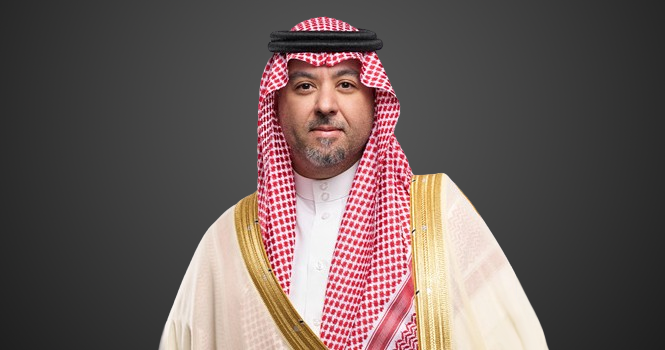
Omar Hariri, CEO of SAL Saudi Logistics Services Co.
Omar Hariri, CEO of SAL Saudi Logistics Services Co., said the company maintained its profit margins despite handling volumes returning to normal levels after the exceptional performance recorded in 2024, thanks to operational discipline, a flexible cost structure, and operating leverage.
In an interview with Argaam, Hariri said Q4 2025 results reflected disciplined execution and operational excellence across business segments, helping drive a 25% year-on-year (YoY) revenue growth in the fourth quarter and 5% for the full year.
He added that performance was supported by strong seasonal momentum in ground handling volumes, which reached about 265,000 tons, a rise of 5%, alongside continued double-digit growth in the logistics segment.
The CEO noted that the cargo ground handling segment remained the main profitability driver, posting an operating margin of nearly 51% in the final quarter and signing four key contracts with international clients. Meanwhile, the logistics segment recorded 15% growth during the period, supported by business expansion and rising demand for integrated solutions.
He also said that the SAL Logistics Zone project in Malham, north of Riyadh, spanning more than 1.5 million square meters (sqm), has entered the execution phase and will be developed in stages through 2030.
Interview details:
Q: What were the main drivers behind SAL’s strong financial and operational performance in Q4 2025?
A: Q4 performance was driven by operational excellence and disciplined execution across segments, resulting in solid profitability levels.
Despite a high comparison base from 2024, the company achieved 25% YoY revenue growth in Q4 and 5% for the full year.
Revenue rose on the back of seasonal momentum in the cargo ground handling segment, with volumes reaching around 265,000 tons, a rise of 5% YoY, in addition to sustained double-digit growth in the logistics segment.
Operating profit (EBIT) increased 30% YoY, while the operating margin improved by 1.8 percentage points to 39.7%, supported by cost efficiency and strong cash flows.
At the same time, robust cash generation and disciplined working capital management strengthened SAL’s ability to grow earnings while advancing its strategic investment program.
Q: How did the cargo ground handling and logistics segments contribute to performance, and what were the key developments in each?
A: The cargo ground handling segment continued to be SAL’s main profitability driver, delivering strong revenue growth driven by higher volumes, service expansion, and an improved service mix, with an operating margin of nearly 51% in Q4.
The company enhanced revenue quality by signing four major contracts with international clients — including Emirates and Chinese airlines — and converting ad-hoc flights into long-term operating agreements, supporting revenue sustainability.
Meanwhile, the logistics segment recorded 15% YoY revenue growth, fueled by portfolio expansion and new contracts with clients such as Riyadh Air and the Saudi Motorsport Co.
This reflects strong commercial execution and continued investment in capabilities and infrastructure to support scalable, sustainable growth.
Q: Can you share more details about the Falcon City (SAL Logistics Zone) project in Malham and its strategic importance?
A: The SAL Logistics Zone is a long-term strategic investment and a flagship project aimed at establishing a next-generation integrated logistics hub in northern Riyadh to support expansion in value-added logistics services.
Spanning more than 1.5 million sqm, it will be among the largest and most advanced logistics zones in the Kingdom in terms of warehousing capacity.
During the last quarter, the project moved from planning to execution, with initial site preparation and early development phases underway. It will be rolled out in stages through 2030, allowing flexible capacity deployment in line with demand growth.
Strategically, the zone will be a key growth engine for SAL’s logistics segment, enhancing multimodal connectivity and supporting the company’s role in Saudi Arabia’s transformation into a global logistics hub under Vision 2030.
Management sees a clear demand gap and strong customer need for such projects, given the sector’s rapid progress and growth opportunities, reinforcing expectations for the project’s long-term success.
Q: What motivated the launch of the sukuk program, and how will it support expansion plans?
A: SAL launched its first sukuk program to secure an appropriate long-term financing platform for the next growth phase.
As the business expands, aligning the capital structure with growth and funding strategic investments in a disciplined and flexible manner has become essential.
In January 2026, SAL successfully completed a SAR 1 billion sukuk issuance under a private placement, which was 1.4 times oversubscribed, reflecting strong investor confidence in the company’s strategy and financial fundamentals.
The issuance marks an important milestone by broadening access to capital markets and diversifying long-term funding sources while maintaining a strong balance sheet.
Most importantly, the program provides additional financing flexibility to support upcoming growth initiatives, particularly logistics infrastructure investments and the SAL Logistics Zone, while preserving prudent leverage and strong cash flows.
Q: How does SAL balance capital investments, dividends, and financial discipline?
A: SAL’s capital allocation model is built on strong operating cash flows and strict financial discipline, enabling growth investments while maintaining stable shareholders' equity.
In fiscal year 2025, net cash from operating activities reached SAR 957 million, while adjusted free cash flow stood at SAR 814 million, reflecting improved working capital efficiency and sustainable profitability.
These cash flows allow the company to proceed with its investment program while adhering to a dividend policy of distributing 75% of net income, balancing growth funding with attractive returns.
Q: What role is expected for SAL in major national events such as the 2027 AFC Asian Cup, and how might this impact results?
A: SAL expects to play a central role in major national and international events, leveraging its expertise in logistics and event handling and its track record in supporting global events such as Formula 1 and the Dakar Rally.
As preparations for events like the 2027 AFC Asian Cup continue, demand is expected to build gradually as event dates approach.
Q: What are SAL’s strategic priorities and growth outlook for 2026?
A: In cargo ground handling, SAL aims to maintain leadership and deliver stable earnings through automation, service innovation, disciplined cost management, and strengthened long-term client relationships.
In logistics, momentum is expected to accelerate as operational expansion continues and investments in infrastructure and digital capabilities translate into margin improvement and higher earnings quality.
Progress in the SAL Logistics Zone, adoption of advanced technologies, and targeting higher-value customer segments are also expected to support this trajectory.
With a strong balance sheet, high cash generation capacity, and clear alignment with Vision 2030, SAL is well positioned to achieve sustainable growth and create long-term shareholder value.
Q: How resilient is SAL’s profitability across handling volume cycles after normalization from the exceptional 2024 levels?
A: SAL’s business model is designed to remain resilient across operating cycles.
Despite handling volumes returning to normal after the exceptional 2024 year, the company preserved margins and profitability through operational discipline, a flexible cost structure, and operating leverage.
Customer diversification and the growing contribution of the logistics segment further reduce reliance on air cargo volumes alone, enhancing earnings stability.
The cargo ground handling segment benefits from a diversified customer base, long-term airline partnerships, and an improving service mix that helps absorb volume fluctuations.
At the same time, the expanding contribution of logistics segment strengthens group-level earnings diversification.
Overall, SAL’s platform enables it to capture upside during volume growth while protecting profitability during softer operating conditions, reinforcing earnings resilience and sustainability.
Comments {{getCommentCount()}}
Be the first to comment
رد{{comment.DisplayName}} على {{getCommenterName(comment.ParentThreadID)}}
{{comment.DisplayName}}

{{comment.ElapsedTime}}


Comments Analysis: