

-
 Bank Ranking
Banks Ratios
Cement Statistics
Cement Ranking
Cement Ratios
Monetary and Economic Statistics
Oil, Gas and Fuel
Macro Economy
Consumer Spending
Inflation
Exports & Imports
Food Prices
Non Food Prices
Construction Materials
Petrochem. Ranking
Petrochem. Ratios
Retail Rankings
Retail Ratios
Grocery Ranking
Grocery Ratios
Top Growth
Dividend History
Bank Ranking
Banks Ratios
Cement Statistics
Cement Ranking
Cement Ratios
Monetary and Economic Statistics
Oil, Gas and Fuel
Macro Economy
Consumer Spending
Inflation
Exports & Imports
Food Prices
Non Food Prices
Construction Materials
Petrochem. Ranking
Petrochem. Ratios
Retail Rankings
Retail Ratios
Grocery Ranking
Grocery Ratios
Top Growth
Dividend History

Maharah CEO: Most strategic contracts renewed, utilization rates rise to 92%

 AI Summary

Content Summary: 
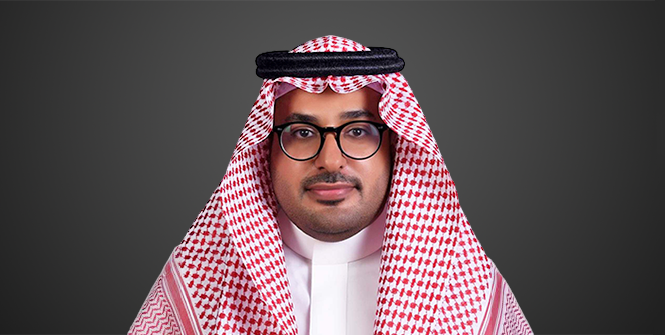
Abdulaziz Al-Kathiri, CEO of Maharah Human Resources Co.
Maharah Human Resources Co. renewed most of its existing strategic contracts and signed new contracts worth more than SAR 270 million during the first half of 2026, CEO Abdulaziz Al-Kathiri told Argaam.
The company also expanded into specialized sectors and the Saudi staffing outsourcing segment, he added.
Al-Kathiri said that the company retained 98% of clients whose contracts expired during H1 2026, while its workforce retention rate stood at 80%.
He noted that growth was driven not only by new contracts, but also by renewals of existing contracts with strategic clients.
The utilization rate rose to 92%, compared with 83% previously, while the share of e-sales in the individuals segment increased to more than 72%, from around 42%. The company is working to achieve, and in some cases exceed, its 2026 targets, while continuing to focus on operational and technological efficiency, according to the top executive.
Al-Kathiri also expects the company’s business momentum to continue through H2 2026. He highlighted that the company is targeting revenue and workforce growth of 6-7% in the business segment, revenue growth of 15-18% in the individuals segment, and workforce growth of 27-30%, driven by new services, geographic expansion and improved utilization rates.
Here are the details of the interview:
The company reported revenue and net profit growth during H1 2026. What were the key factors behind this growth?
These results are a continuation of the clear path we set out in the “Maharah Growth” strategy and the result of implementing its initiatives, which have had a direct impact on the company’s financial performance.
Revenue grew 26% to SAR 1.85 billion, gross profit increased 47% to SAR 204 million, and net profit rose 49% to SAR 132 million, compared with SAR 88.8 million in the same period last year. Earnings per share reached SAR 0.23, versus SAR 0.16.
However, in my view, the figure that truly reflects the performance is operating profit, which grew 60%. When operating profit grows faster than revenue, this means the improvement in efficiency is structural and sustainable, rather than driven by exceptional factors. Gross profit margin increased to 11%, while operating profit margin reached 7.3%.
This was Maharah’s strongest first-half performance in its history in terms of revenue, gross profit and operating profit, as well as the largest workforce managed by the company, exceeding 64,000 male and female workers.
Net profit rose 49% despite a SAR 18 million decline in the company’s share of profits from Saudi Co. for Health Systems. To what extent does profit growth reflect an improvement in operational performance?
This is a pertinent question and, in my view, highlights the most important aspect of the first-half results: growth came from core operations rather than investment returns.
Maharah’s own contribution to net profit growth amounted to approximately SAR 43.3 million, while subsidiaries contributed SAR 7.3 million, and lower financing costs provided an additional SAR 11 million. Meanwhile, our share of profit from the associate declined by approximately SAR 18.1 million. Despite this decline, net profit grew 49%.
In other words, had it not been for the decline in the associate’s contribution, growth would have been higher than reflected in the reported figures. This is what we mean when we say that the improvement is structural and sustainable rather than exceptional.
Q2 2026 net profit declined by around 30% quarter-on-quarter. What factors affected the quarterly results?
The more appropriate comparison for this sector is year-on-year. On that basis, second-quarter profit grew 23% compared with the corresponding quarter of 2025.
The comparison QoQ is affected by seasonal items in direct costs and marketing campaigns, in addition to a decline in the associate’s contribution during Q2. None of this changes our assessment of the performance trend.
Net profit margin stood at 7.1% in H1 2026, within the announced guidance range. Do you expect it to improve in H2 2026?
It is within the announced range, despite the approximately SAR 18 million decline in our share of profit from the associate.
The trend I personally monitor is gross profit and operating profit, both of which improved significantly: gross profit rose 47% and operating profit increased 60%. These two indicators reflect the quality of operations without the impact of investment-related items.
The business segment led revenue growth during H1 2026. Which sectors or activities do you expect to drive growth going forward?
Growth was concentrated in the business segment, which led overall performance with revenue of SAR 1.507 billion, up 29%. This was driven by a 15% increase in the segment’s workforce to more than 47,000 employees, alongside 31% growth in professional staffing — representing a shift in the workforce mix toward higher-value categories rather than simply an increase in headcount.
More importantly, this growth did not come from a single sector. Our client portfolio is diversified across several sectors, including industrial, commercial, contracting, petrochemicals, healthcare and hospitality, all of which recorded strong growth rates. The petrochemical sector, for example, grew 81%, while the healthcare sector grew 32%.
We are also particularly proud of the Saudi staffing outsourcing segment, which is part of the business segment. It grew 32% to revenue of SAR 124 million and represents a strategic pillar for diversifying our revenue sources, supported by localization requirements and Vision 2030 projects. Saudi staffing outsourcing essentially means that Maharah recruits and fully manages national talent and then assigns them to the client. Every position we provide to a Saudi national represents a direct contribution to enabling the Saudi labor market.
In my view, this diversification is one of the key strengths of our business model, as it limits concentration risks and reduces the impact of any slowdown in a particular sector on overall performance. This is further supported by our retention of 98% of clients whose contracts expired, in addition to new contracts worth SAR 270 million, whose impact will be reflected in the second half of the year.
As for the individuals segment, it continued its structural transformation, generating revenue of SAR 283 million, up 20%, while recording a significant improvement in profitability, with its margin increasing from around 7% to 18%.
The gross profit margin of the individuals segment increased from around 7% to 18%. What factors contributed to this improvement?
What happened in the individuals segment was a structural transformation resulting from systematic investments that began two years ago, rather than a temporary improvement.
Revenue grew 20% to SAR 283 million, while gross profit increased from SAR 16 million to SAR 51 million. In other words, the segment contributed around SAR 32 million to the group’s gross profit growth — a contribution that exceeds that of the business segment despite the significant difference in their respective sizes.
The segment’s workforce also increased to 17,000 employees, up 13%, in line with the expansion of our customer base and growing demand for its services.
E-sales in the individuals segment increased to more than 72%. What has been the financial impact of this shift on operating costs and segment profitability?
Maharah is now at the forefront of its sector, and technology is an integral part of our operating model rather than a parallel project.
The clearest example is the transformation in demand channels within the individuals segment. A significant portion of orders has shifted from branches to the company’s application, with e-sales now accounting for more than 72%, compared with around 42%. This significantly reduces customer acquisition costs and accelerates the service cycle.
In addition, we have enhanced our operating system with artificial intelligence models covering transportation management, intelligent demand scheduling, and forecasting systems that identify where we need manpower before the demand reaches us, as well as business intelligence models for reallocating resources between regions. Together, these systems have increased the utilization rate from 83% to 92%.
The result has been a significant improvement in the profitability of the individuals segment — a structural improvement that we expect to sustain and further strengthen across our operating models.
- Maharah’s share of profits from Saudi Co. for Health Systems declined during H1 2026. What are your expectations for the associate’s performance going forward?
Yes, it declined to SAR 14.4 million from SAR 32.5 million in the same period a year earlier. More importantly, we recorded it this time because we obtained the necessary financial information from the associate. This is what we had previously emphasized: the accounting treatment is recorded as soon as the relevant data becomes available. We also restated the comparative figures for previous periods in accordance with the requirements of International Accounting Standard (IAS) 8.
In general, we believe the decline was primarily due to higher costs, specifically food costs, which experienced a broad-based increase. This affected profit margins, while the volume of business remained at last year’s levels.
Based on the preliminary information available to us, we expect the associate’s performance to improve, particularly following the start-up of the catering project at the end of Q2, in addition to other ongoing projects.
The point I would emphasize is that despite the approximately SAR 18 million decline in this contribution, Maharah’s net profit grew 49%. This means our growth came from core operations rather than investment results.
What are the latest developments regarding the auditor’s notes concerning Saudi Co. for Health Systems, and when do you expect it to be resolved?
We need to distinguish between two matters: our receipt of the financial information, which enabled us to record our share of the results; and enabling the auditor to have direct access to the associate’s management and its external auditor to perform the necessary review procedures.
The first has been achieved. The second remains outstanding, and we are working to address it through official channels. We remain committed to disclosing any material developments when they occur.
Are you considering restructuring or exiting some non-core investments, including the company’s stake in Saudi Co. for Health Systems?
The investment, like our other investments, is subject to periodic review as part of an approved roadmap for our portfolio. Any material decision will be made in the best interests of Maharah’s shareholders and disclosed through the official channels at the appropriate time.
Financing costs declined 46% during H1 2026. Do you expect financing and borrowing costs to continue declining going forward?
Yes. This is an approved plan under the company’s financial transformation program, and its results have begun to emerge clearly. The outstanding loan balance has declined, while financing costs fell 46% year-on-year to SAR 12.5 million. We also completed a partial early repayment of our outstanding long-term loans in July.
I would emphasize that the objective is not to reduce debt for its own sake, but to achieve a more efficient capital structure that strengthens our financial position and reduces our sensitivity to fluctuations in financing costs, while maintaining sufficient financial flexibility to support Maharah’s growth trajectory.
In the same context, the company’s extraordinary general meeting approved in June a capital increase from SAR 475 million to SAR 600 million through a bonus share issue at five shares for every 19 shares held, funded from the statutory reserve and retained earnings. We also distributed SAR 58.6 million in interim dividends for H2 2025, equivalent to 13 halalas per share, which were paid in May.
The market is seeing new entrants offering services at lower prices. How is Maharah responding to increasing competition in the sector?
We recognize that new players are entering the market and that some are offering services at lower prices. At Maharah, however, we remain committed to three non-negotiable pillars: quality, reliability and customer experience. We believe competition in this sector is centered on service quality and the ability to deliver it consistently at scale, and this is where we invest. Thankfully, we continue to lead the market despite intensifying competition.
The most important indicator for me is not market share but customer trust. During H1 2026, we retained 98% of clients whose contracts expired, while workforce retention increased to 80%. In my view, these two figures are more telling than any other indicator, because a client who renews after a full year of service has actually evaluated our performance rather than simply relying on a promise.
This is further demonstrated by the fact that our growth did not come solely from new contracts, but also from renewing existing contracts with strategic clients, alongside new contracts worth SAR 270 million, whose impact will be reflected during H2 2026 and 2027.
These pillars are not merely slogans; they represent investments with measurable effects in our numbers. The utilization rate increased from 83% to 92%, e-sales rose from 42% to more than 72%, and this was reflected in the gross profit margin, which reached 11%. In addition, our agreement with ManpowerGroup began actual operations this year, opening up a specialized professional staffing line based on global methodologies and platforms.
We do not view competition defensively. The presence of serious competitors raises the overall standard of the market, which benefits customers first and licensed, compliant companies second.
What are the main ways in which the Ministry of Human Resources and Social Development is supporting the growth and regulation of the human resources sector?
The ministry plays a pivotal role as the sector’s regulator and legislator. Its impact extends beyond supporting growth to regulating the market itself. Its efforts to raise governance and compliance standards, diversify recruitment sources, and open new channels such as home maintenance, training and accommodation services directly benefit licensed and compliant companies, as they raise the market’s standards, regulate practices and ensure that competition is based on service quality.
We thank the ministry for its continued support. Communication with the ministry is ongoing and regular through the National Committee for Human Resources Companies and the Coordinating Council for Human Resources Companies. We regard this institutional coordination as one of the factors contributing to the sector’s maturity and development.
MSCI upgraded Maharah’s ESG rating to B. How important is this rating to the company?
We consider it an independent recognition of work that began around three years ago. We announced a sustainability strategy comprising several initiatives across its three pillars — environmental, social and governance — and worked systematically to implement them across the company’s various departments.
What matters most to me is that the impact of these initiatives has not remained limited to disclosures and reporting. We have seen their operational impact within the company, in governance standards and operational discipline, in our relationship with our workforce, and in resource efficiency. We have benefited significantly from these initiatives, and they have genuinely influenced the way we manage the business.
The revision of our rating on the MSCI Sustainability Index to B confirms that this journey is moving in the right direction. We will continue to build on it in line with the objectives of Saudi Vision 2030.
What are your expectations for H2 2026, and what are your targets for the remainder of the year?
We expect the momentum to continue, supported by the renewal of most existing strategic contracts, as well as new contracts signed during H1 with a total value exceeding SAR 270 million, whose impact will be reflected during H2 2026 and next year. This will be accompanied by continued expansion into specialized sectors and Saudi staffing outsourcing.
Compared with H1 performance and the guidance ranges announced for 2026 — revenue growth of 10-13%, workforce growth of 10-12%, gross profit margin of 10-12%, and net income margin of 7-9% — we have exceeded the targeted revenue growth range, while margins remained within the announced ranges.
At the segment level, we are targeting revenue and workforce growth of 6-7% in the business segment. In the individuals segment, we are targeting revenue growth of 15-18% and workforce growth of 27-30%, driven by new services, geographic expansion and improved utilization rates.
The announced guidance ranges remain our benchmark, and we review our targets periodically. We are working to achieve all of our full-year targets and exceed some of them, while continuing to focus on operational efficiency and investment in technology and national talent, in line with the “Maharah Growth 2030” strategy.
Comments {{getCommentCount()}}
Be the first to comment
رد{{comment.DisplayName}} على {{getCommenterName(comment.ParentThreadID)}}
{{comment.DisplayName}}

{{comment.ElapsedTime}}


Comments Analysis: