

-
 Bank Ranking
Banks Ratios
Cement Statistics
Cement Ranking
Cement Ratios
Monetary and Economic Statistics
Oil, Gas and Fuel
Macro Economy
Consumer Spending
Inflation
Exports & Imports
Food Prices
Non Food Prices
Construction Materials
Petrochem. Ranking
Petrochem. Ratios
Retail Rankings
Retail Ratios
Grocery Ranking
Grocery Ratios
Top Growth
Dividend History

How do MSCI and FTSE affect Saudi stocks?

 AI Summary

Content Summary: 
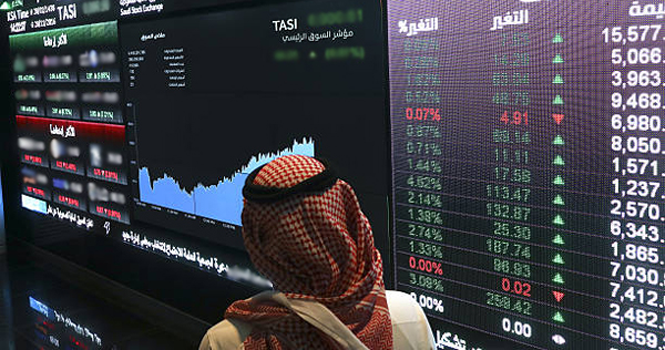
Tadawul trading screen
Saudi Arabia’s 10 largest companies account for approximately 76% of the total weight of the MSCI Saudi Arabia Standard Index, compared with around 28% for the 10 largest companies in the Small Cap Index, reflecting differences in concentration between the two benchmarks.
MSCI data as of end-October 2026 showed Al Rajhi Bank leading the Standard Index with a weighting of 17.36%, followed by Saudi Aramco at 15.50% and Saudi National Bank (SNB) at 10.43%.
Global indices are important benchmarks for foreign and domestic investors. Institutional investors use them to measure portfolio performance and determine company weightings. Their periodic reviews also affect trading in stocks subject to changes in index constituents.
Raman Subramanian, Managing Director of Index Research MSCI, said Saudi Arabia had established itself as a key constituent of the MSCI Emerging Markets Index following its inclusion in 2019.
He explained that the Saudi market’s weighting in the index is determined by the free-float-adjusted market capitalization of eligible Saudi companies relative to companies listed in other emerging markets.
The inclusion of new companies increases in free-float percentages, and improved foreign investor access to the market could influence the Kingdom’s weighting going forward. The relative performance of Saudi stocks is another factor, he added.
Continued development of the Saudi equity market and diversification of its sectors could also expand the investment opportunities represented by MSCI indices, he noted.
Meanwhile, David Sol, Global Head Policy and Managing Director at FTSE Russell, said the firm had a longstanding relationship with Saudi Arabia, built on extensive engagement with market participants and stakeholders ahead of the Kingdom’s upgrade to emerging market status.
FTSE Russell announced the Kingdom’s upgrade in March 2018, with implementation beginning in March 2019. Since then, the firm’s indices have served as important tools enabling international investors to access and assess investment opportunities in the Saudi market, he said.
He added that London Stock Exchange Group (LSEG) remains committed to supporting the objectives of Saudi Vision 2030 and the Kingdom’s transition toward a diversified, sustainable, and globally competitive economy.
What Is the difference between MSCI and FTSE Russell?
MSCI and FTSE Russell are among the world’s leading providers of investment indices.
MSCI offers a Standard Index for the Saudi market covering large- and mid-cap companies, representing approximately 85% of free-float-adjusted market capitalization while also offering a Small Cap Index covering around 14%.
FTSE Russell, a subsidiary of London Stock Exchange Group (LSEG), offers Saudi equity indices as part of its global index series. These cover large-, mid- and small-cap companies and apply criteria related to market capitalization, liquidity and investability.
Indices designed for foreign investors take into account restrictions on share ownership. FTSE Russell also offers domestic indices based on free-float shares without applying foreign ownership restrictions.
Differences in the two providers’ methodologies result in variations in constituent companies, their weightings and index review schedules.
David Sol said the role of an index provider is to maintain transparent benchmarks reflecting the markets they represent, enabling investors to express their investment views and build investment products.
FTSE Russell offers investors various options to gain exposure to the Saudi market through its broad range of equity, fixed-income, foreign exchange, commodity and sustainability indices. Its offerings also include Shariah-compliant indices, sukuk, digital assets, and private markets, he added.
Ultimately, investors determine their desired level of exposure to the market based on a wide range of factors, he noted.
|
Comparison of MSCI Saudi Indices as of End-October 2026 |
||
|
Metric |
Standard Index |
Small Cap Index |
|
Number of companies |
28 |
81 |
|
Coverage of free-float market capitalization |
Around 85% |
Around 14% |
|
Index market capitalization ($ bln) |
269.58 |
48.51 |
|
Largest constituent by weighting |
Al Rajhi Bank |
Bank Aljazira |
|
Largest constituent weighting |
17.36% |
3.73% |
|
Weight of top 10 companies |
75.68% |
28.32% |
* Source: MSCI, data as of Oct. 30.
Al Rajhi, Aramco and SNB Account for 43% of Standard Index
The three largest companies in the MSCI Saudi Arabia Standard Index account for 43.29% of its total weighting, rising to 75.68% for the 10 largest constituents.
By contrast, Bank Aljazira leads the Small Cap Index with a weighting of 3.73%, while the 10 largest companies account for just 28.32%, reflecting a broader distribution of weightings compared with the Standard Index.
|
Top 10 Constituents by Weighting in MSCI Saudi Indices |
|||
|
Standard Index Constituent |
Weight |
Small Cap Index Constituent |
Weight |
|
Al Rajhi Bank |
17.36% |
Bank Aljazira |
3.73% |
|
Saudi Aramco |
15.50% |
Electrical Industries |
3.10% |
|
SNB |
10.43% |
SAL |
3.02% |
|
stc |
8.14% |
Aldrees |
2.98% |
|
Maaden |
6.50% |
Tadawul Group |
2.86% |
|
SABIC |
4.19% |
Rasan |
2.84% |
|
Riyad Bank |
3.74% |
Mouwasat |
2.73% |
|
ACWA Power |
3.53% |
Astra |
2.40% |
|
Alinma Bank |
3.15% |
Sipchem |
2.34% |
|
SAB |
3.14% |
SIIG |
2.32% |
|
Total |
75.68% |
Total |
28.32% |
* Source: MSCI, data as of Oct. 30, 2026, before implementation of the November review.
Higher concentration in the Standard Index means that the performance of a limited number of large companies has a greater impact on its overall performance. Meanwhile, weightings in the Small Cap Index are spread across a wider range of stocks.
However, lower concentration does not necessarily mean lower investment risk, as small-cap companies may be more sensitive to changes in liquidity and operating performance.
In this context, Subramanian said market concentration was not unique to Saudi Arabia, but was also present in several emerging equity markets.
He explained that MSCI's market-capitalization-weighted indices are designed to reflect the actual structure of the investable equity market, rather than impose specific diversification targets. As a result, larger companies account for a greater share of index weightings.
This concentration highlights the importance of international investors understanding their portfolios' exposure to individual companies and sectors when assessing investment diversification, he added.
The inclusion of new companies, increases in free-float shares and growth across different sectors could gradually broaden the Saudi equity market's representation in global indices, he noted.
MSCI and FTSE reviews: how do they affect stocks?
Both providers conduct periodic reviews of their index constituents, which may result in companies being added, removed or transferred between large-, mid- and small-cap categories.
A company's inclusion in an index may increase demand for its shares from funds tracking that benchmark. Conversely, its removal may prompt some funds to reduce their holdings.
In its November 2026 review, MSCI removed ADES Holding Co. and Makkah Construction from the Saudi Standard Index, with Makkah Construction and Development Co. moving to the Small Cap Index, effective at the market close on Nov. 30.
FTSE's August 2026 review also included the promotion of Rasan to the mid-cap category and the transfer of Arabian Contracting Services Co. (Al Arabia) to the small-cap category, among other changes.
A company's removal from an MSCI index does not automatically mean its exclusion from FTSE indices, given the differences in the two providers' methodologies and review schedules.
Potential investment flows depend on a stock's weighting, the assets tracking the index and portfolio management strategies. They cannot be determined solely by an inclusion or exclusion decision.
David Sol said periodic index reviews and rebalancing are a normal and important part of index management, ensuring that benchmarks continue to reflect the markets they are designed to represent.
Rebalancing may lead to increased trading activity as passive investors adjust their holdings by buying and selling securities in line with changes to index constituents and weightings, he explained.
These processes help maintain the integrity and representativeness of benchmarks while supporting the efficient functioning of capital markets, he added.
How do foreign ownership limits affect saudi company weightings?
Raman Subramanian said foreign ownership limits are an important factor in determining company weightings in MSCI indices, as they affect the proportion of market capitalization available to international investors.
Raising permitted foreign ownership limits could increase companies' Foreign Inclusion Factors (FIFs), thereby raising their weightings in relevant MSCI indices, subject to the applicable methodology and other eligibility requirements, he explained.
The impact would vary across companies and sectors, depending on existing foreign ownership restrictions, the available headroom for increased foreign investment and the proportion of free-float shares.
Companies whose index inclusion is currently constrained by foreign ownership limits stand to benefit the most from potential changes. Any resulting adjustments would be assessed through MSCI's established review processes, he added.
Meanwhile, Sol said foreign ownership restrictions directly affect the proportion of free-float shares available to international investors in the Saudi market. FTSE Russell continues to monitor developments that could affect free-float levels, he noted.
An increase in free-float shares could improve international investors' access to the market and facilitate participation by index users, helping broaden the investor base and expand access to investment opportunities, he added.
What do these indices mean for investors?
MSCI and FTSE indices help foreign investors assess their portfolios' exposure to the Saudi market and compare its performance with other markets, while accounting for investability and foreign ownership restrictions.
For domestic investors, tracking company weightings and index changes provides a better understanding of institutional investment flows and the reasons behind certain movements in liquidity and trading volumes.
A stock may experience higher trading activity during rebalancing periods without any material change in the company's financial results or operations.
Therefore, monitoring indices helps investors distinguish between movements driven by portfolio reallocation and those resulting from companies' financial performance and fundamental valuations.
Regarding foreign investor participation, Subramanian said the growing share of foreign investors in Saudi equity trading was a positive sign of the market's increasing integration with global capital markets.
However, this does not necessarily mean an increase in the overall value of their investments, particularly if total market trading value declines, he added.
Saudi Arabia's inclusion in the MSCI Emerging Markets Index in 2019 marked an important milestone in raising the market's international profile and improving access for global investors, he noted.
Global indices provide institutional investors with a framework for assessing their market exposure and allocating capital, he explained.
Foreign investor participation is also influenced by market reforms, investment opportunities and global financial conditions, he added.
Comments {{getCommentCount()}}
Be the first to comment
رد{{comment.DisplayName}} على {{getCommenterName(comment.ParentThreadID)}}
{{comment.DisplayName}}

{{comment.ElapsedTime}}


Comments Analysis: